Everybody budgets for cabinets. Almost nobody budgets for the six weeks of eating standing up in the dining room.
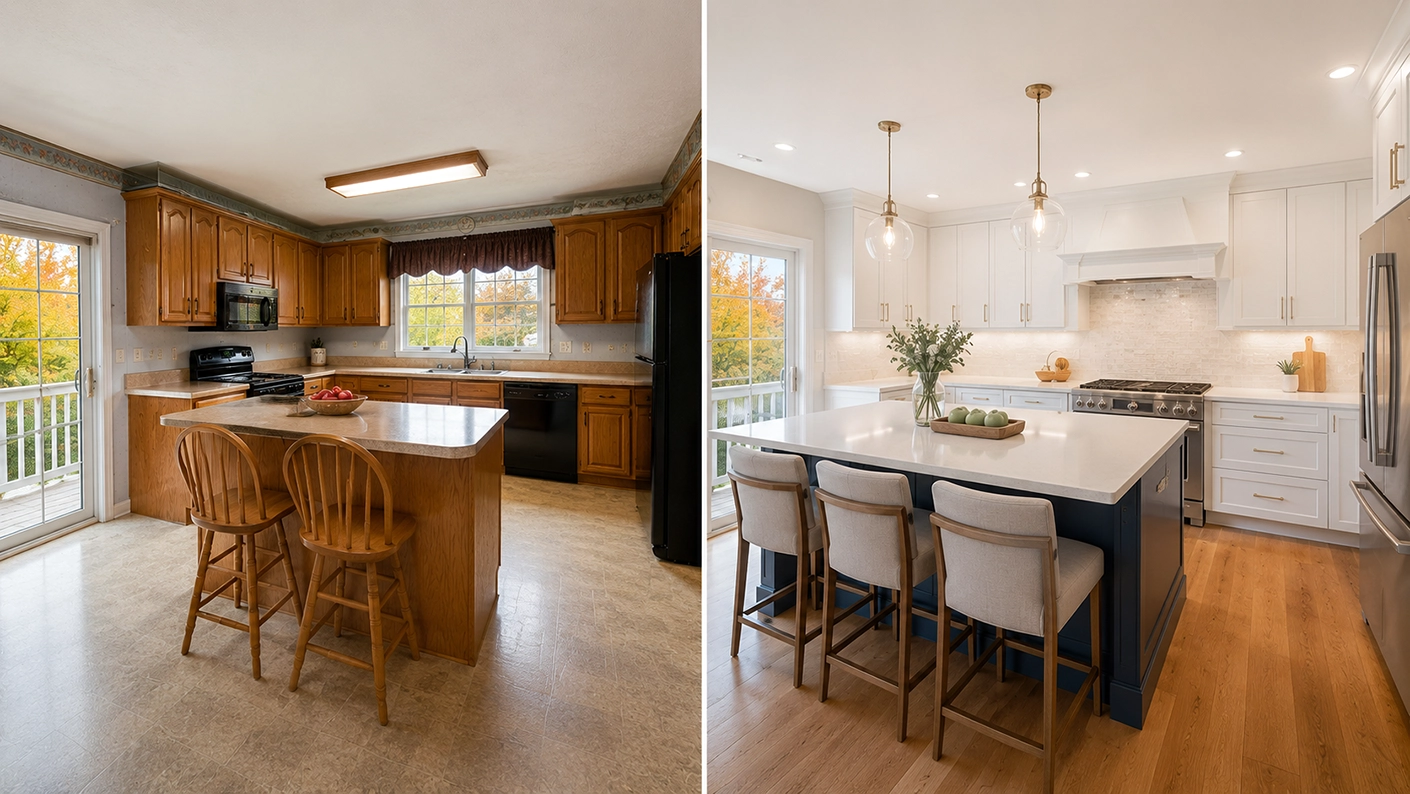
That gap is the part of a kitchen remodel people actually remember. The finished space is wonderful. The stretch before it — no sink, no range, a fridge in the garage, dinner out of a toaster oven balanced on a folding table — is what makes homeowners say “never again” or “honestly, it wasn’t bad.” The difference between those two outcomes is almost entirely planning, and almost all of that planning has to happen before demo day.
This is the practical guide we give our kitchen remodel clients. You can survive without a working kitchen for a month and a half. You just can’t wing it.
How Long Will You Really Be Without a Kitchen?
Most homeowners assume the outage matches the construction schedule. It doesn’t. Your kitchen goes offline the day demo starts and comes back the day the sink gets hooked up — and those two dates are usually further apart than the calendar suggests.
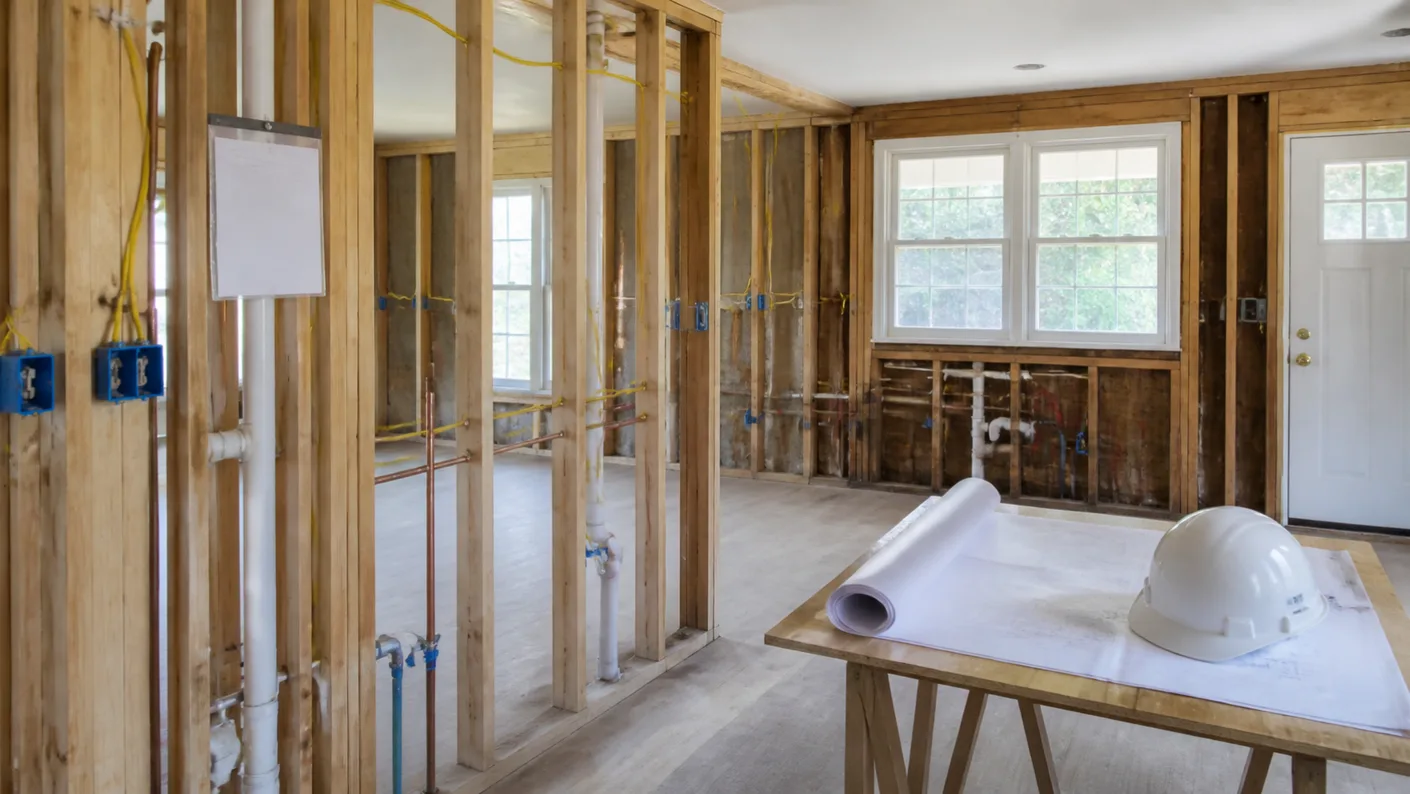
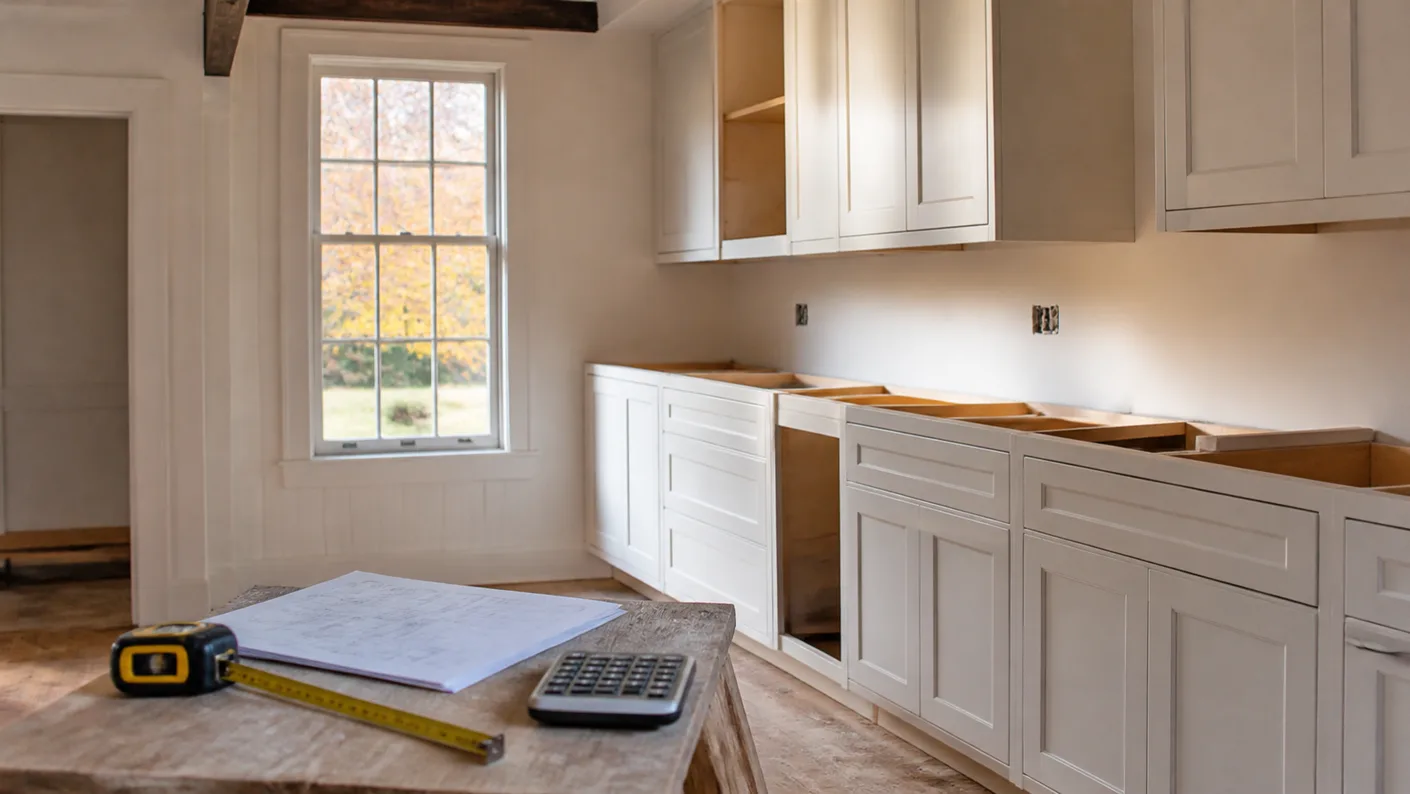
A typical kitchen renovation runs six to ten weeks on site. The part where you’re genuinely without a kitchen is most of it. Demo takes a couple of days. Rough plumbing and electrical, another week. Drywall, paint, flooring, then cabinets. Then the countertop template — and this is the step nobody sees coming, because the fabricator can’t measure until the base cabinets are set, and then it’s another one to two weeks before the counters arrive. Your sink and stove sit in the garage that entire time.
So when someone asks how long they’ll be cooking out of a microwave, the honest answer is: assume the whole job, not the last week of it. Plan for eight weeks and be pleasantly surprised at six. A kitchen reno that “only takes a few weeks” is one you should ask hard questions about.
Plan Your Temporary Kitchen Before Demo Day
The single biggest mistake we see is homeowners setting up a makeshift kitchen after the real one is already gone. By then the boxes are packed, the fridge is unplugged, and everyone is hungry and annoyed. Set the temp kitchen up while you still have a working one to fall back on.
Picking the right room
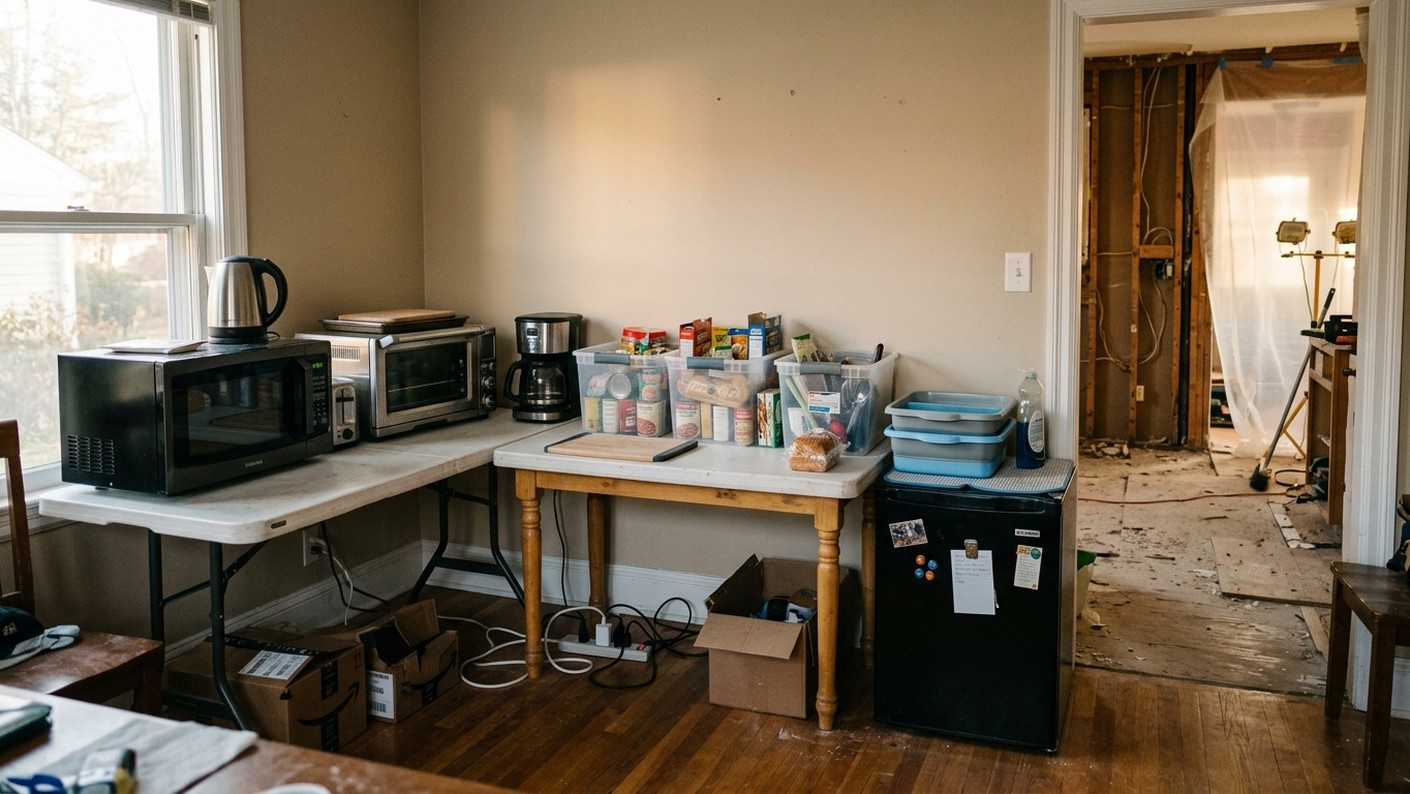
You need three things: water, power, and low traffic. That usually points to the dining room, the basement, the garage, or a laundry room — somewhere out of the construction path but not so far that nobody uses it.
The dining room is the most common choice because it’s adjacent and it already has a dining table you can eat at. If your kitchen table survives demo, drag it in there and use it as prep space. A basement works well if there’s a utility sink down there, which solves the hardest problem on this list. A garage is a great space in spring and fall and a miserable one in a New England February. A family room is comfortable but you’ll be living with food smells in the area where you relax.
Whichever space you pick, get furniture out of it that you don’t need, and bring in a folding table or two. Folding furniture is the right call here — it maximizes floor space, it moves out when you need the area back, and it costs almost nothing. Two folding tables give you a prep surface and an eating surface, which is more counter space than most temporary setups ever manage.
Water, power, and a talk with your contractor
Before you commit to a room, check what’s actually available. A microwave, a toaster oven, and a coffee maker running off one circuit will trip a breaker the first time you use them together. Spread them across outlets on different circuits, and keep appliances off the eating surface so you don’t lose the whole table to hardware.
Then talk to your contractor. Ask specifically which days the water will be shut off, when the power to that section of the house goes down, and where the crew will be staging materials. A good builder can usually sequence the plumbing so you’re never without water overnight — but only if they know you’re depending on the laundry tub two rooms away.
The Appliances That Replace a Range
You don’t need a second kitchen. You need four or five small appliances that between them cover heat, speed, and coffee.
A countertop microwave is non-negotiable — it’s the workhorse of the entire remodel. A toaster oven is the most valuable thing you’ll buy; a decent convection toaster oven functions as a mini oven and handles roasting, baking, and reheating that a microwave ruins. An Instant Pot or slow cooker does soups, stews, chili, rice, and shredded chicken with no supervision and one pot to wash. An air fryer covers everything crispy. And a single induction burner or hot plate gives you an actual stove surface for a skillet — an induction burner heats faster, stays cool to the touch, and won’t add heat to a space you’re also eating in.
For drinks, keep the coffee maker on the counter and add an electric kettle. A tea kettle on an induction burner works too, but an electric kettle will boil water faster than anything else you own and doubles for instant oatmeal, couscous, and cleaning. If your setup has no sink at all, a water cooler jug solves drinking and rinsing in one purchase.
What to skip: a second full-size fridge, a chest freezer bought for the occasion, and any appliance that does one thing. You want multitaskers. Bring two or three pots and pans, one good skillet, a cutting board, a sharp knife, and leave the rest of the pots and pans packed. The less stuff you unpack, the less you have to wash.
What Cooking Actually Looks Like Without a Kitchen
Cooking without a kitchen isn’t cooking the way you’re used to. It’s assembly with a heat source, and once you accept that, the whole thing gets easier. Most families find a rhythm inside a week: two or three cooked meals, a couple of no-cook meals, and two nights of takeout.
Here’s what a normal week of cooking looks like in a makeshift kitchen. Sunday you run the Instant Pot twice and get four meals out of it. Monday and Tuesday you reheat. Wednesday an air fryer or an electric skillet handles something fast. Thursday is sandwiches on paper plates and nobody complains — that’s the meal everyone secretly likes best. Friday you eat out. It isn’t ambitious cooking, but it’s real food on the table, and it beats six weeks of pizza.
Three habits make the cooking side work. Do your meal prep in one block rather than nightly — chopping food in a cramped space is the least pleasant part of cooking without a kitchen, so get it over with once. Keep a few real plates and coffee mugs alongside the disposables, so not every meal is eaten off paper. And accept that some meals simply won’t happen for a while: anything that needs four pans, a colander, and a working kitchen sink can wait. Families survive without those dishes for a month and nobody remembers which ones.
How to Survive Without a Sink
This is the hard part. Not the cooking — the dishes. Every homeowner underestimates it, and it’s the thing that breaks people around week three.
Where to wash
Ranked honestly: a basement or garage utility sink is best, a laundry tub is a close second, a bathtub is workable, and a bathroom sink is last. Washing dishes in a bathroom sink is slow and genuinely unpleasant — the basin is too shallow for a stockpot, the faucet is too low, and you’ll be doing it hunched over. If your only option is the bathroom, at least use the tub for anything larger than a plate. Keep a separate hand-soap setup in there too, because a bathroom that doubles as a dish station stops feeling like a bathroom very quickly.
A laundry tub is the unsung hero of the makeshift kitchen. It’s deep, it has a real faucet, it’s already plumbed for soapy water and mess, and the laundry room is usually far enough from the work zone to stay clean. If you have one, build your whole kitchen setup around it.
The two-tub system
Get two plastic dish tubs. One lives where you eat and collects dirty dishes; the other becomes your wash basin. At the end of the day you carry the full tub to the sink, fill the second with hot soapy water, wash, and carry the clean stuff back. Stack washed dishes on a towel to dry rather than carrying them back damp. It sounds trivial. It’s the difference between a controlled routine and dirty dishes colonizing every surface in the house.
Two more things that help. Use paper plates and plastic utensils — this is the one time to stop feeling guilty about it. Disposable plates cut your dish volume by roughly two-thirds, and compostable versions take most of the sting out. And keep your dishwasher connected as long as the schedule allows; if it can stay hooked up through cabinet demo, ask. Even a dishwasher sitting unplumbed in the middle of a gutted space is worth more than a bathroom sink.
Finally, wash as you go. A pot left overnight in an area with no running water is a different problem in the morning than a pot you rinsed when you were done with it.
Eating Well Without a Stove
You will eat out more than usual. Plan for it in the budget rather than pretending otherwise — for most families it’s $400 to $800 over a six-week job, and knowing that number up front takes the guilt out of it.
Cook before you demo
The highest-leverage thing you can do is spend the weekend before demo cooking. Freezer meals — chili, soup, baked ziti, pulled pork, meatballs, curry — reheat beautifully in a toaster oven or Instant Pot and cost you nothing on a Tuesday night when the house is full of dust. Batch cooking before the renovation starts is the single best hour-for-hour investment in this whole process. Do the prep work then: cut veggies, portion proteins, label everything with dates.
Once you’re underway, lean on no-cook meals more than you’d expect. Sandwiches, big salads, grain bowls, charcuterie-style dinners, cereal, yogurt. Healthy meals don’t require a stove; they mostly require having ingredients on hand and not being too tired to assemble them. Keep a mini pantry of non-perishables in clear bins so you can see what you have, and store leftovers in labeled containers with the date on them — in a fridge you’re opening constantly in a dusty house, food safety slips fast. The USDA’s guidance on refrigerating leftovers is worth a two-minute read before you start.
Takeout without wrecking the budget or your health
Frozen TV dinners are easy and they’re not doing you any favors nutritionally. Rotisserie chicken, grocery-store prepared foods, and the better fast-casual places will feed you faster and better than a freezer aisle. If you order takeout three nights a week, make two of them places that serve vegetables. Keep paper plates by the microwave so reheated meals never generate a dish, and still eat at a table — it keeps the routine feeling normal. In a small town the options thin out after eight o’clock, so decide before you’re hungry.
Dust, Noise, and Living Around the Work
Construction dust travels further than anyone expects. Ask your contractor to seal the work zone with plastic barriers and to run negative air if the job is large — good crews do this without being asked, but ask anyway. Close the doors to bedrooms on the same floor, and don’t set up your temp kitchen anywhere a door open to the work area would let dust drift onto your food.
Expect noise from roughly seven to three-thirty. If you work from home, plan calls around it or plan to work somewhere else on demo and tile days. Keep pets out of the work zone entirely — nail guns and open exterior doors are a bad combination — and give kids one room that stays normal.
A Week-by-Week Look at a Six-Week Kitchen Renovation
Week 1 — Demo. Loudest, dustiest week. Your temporary kitchen should already be running. Old cabinets and countertop come out; the fridge moves to the garage or dining room.
Week 2 — Rough mechanicals. Plumbing, electrical, sometimes framing changes. Expect at least one day with water shut off. Quieter than demo but this is when surprises surface behind the walls.
Week 3 — Drywall and paint. Dusty again during sanding. The space starts looking like a kitchen.
Week 4 — Flooring and cabinets. The morale week. Base cabinets go in and suddenly it’s recognizable — but there’s still no sink and no countertop.
Week 5 — The countertop gap. Template is taken, then you wait on fabrication. Nothing visible happens for a week to ten days. This is the week people crack; know it’s coming.
Week 6 — Counters, sink, appliances, punch list. Counters set, plumbing reconnected, appliances in. The day the sink runs is the day you’re back.
When It Makes More Sense to Move Out
Sometimes the right answer is not to tough it out. If the remodel is part of a larger project, if you have an infant or someone with respiratory issues in the house, or if there’s genuinely no water access outside the kitchen, staying elsewhere may cost less than six weeks of restaurant meals plus the strain.
Run the math honestly. Six weeks of takeout for a family of four often lands near $1,000, and by week four the food starts tasting like money. A short-term rental is more than that, but not always by as much as people assume — and staying with family for the two worst weeks, rather than all six, is a middle path most people never consider. You can survive without a kitchen anywhere; the question is only where you’d rather do it.
What a Good Contractor Does to Shorten the Outage
Not all of this is on you. A builder who has done a lot of these will order cabinets and counters early enough that the template gap doesn’t stretch, sequence plumbing so your water outage is hours instead of days, seal the work area properly, and tell you on Friday what’s happening Monday. That last one matters more than homeowners expect — most of the misery in a kitchen renovation comes from not knowing what’s next. Tell a family the counters land Thursday and they’ll survive without a sink until Thursday quite happily.
At Bradley’s Building Solutions we walk clients through the temporary kitchen plan before we swing a hammer, because a smooth six weeks is part of the job. You can see finished projects in our project portfolio, read more about our kitchen remodeling services, or see what the work does for resale in our guide to whether a kitchen remodel increases home value in Massachusetts.
Frequently Asked Questions
How long will I be without a kitchen?
Plan on the full length of the job — typically six to ten weeks — not just the demo phase. The countertop fabrication gap after cabinets are set is what catches most people off guard.
Can I keep using my old appliances during the remodel?
Usually yes for the refrigerator and microwave, which can move to another room on day one and keep feeding you all the way through. The stove and dishwasher come out with demo. If you want a new fridge anyway, buy it early and run the old one in the garage during the project.
Where should I put the fridge?
Garage, basement, or dining room — wherever it’s on a dedicated outlet and out of the work path. A full-size fridge in a garage is fine in most seasons here, but a cheap mini fridge in the house for milk and snacks saves a hundred trips. In deep winter, keep an eye on garage temperatures; a fridge in an unheated space can struggle to hold temperature correctly.
How do I handle dishes without a kitchen sink?
Utility sink or laundry tub first, bathtub second, bathroom sink last. Use two dish tubs, lean on disposable plates, and wash the same day rather than letting it pile up.
Is it worth setting up a makeshift kitchen for a short job?
Yes — even a two-week job is long enough to need one, and a folding table with a microwave and a coffee pot takes twenty minutes to assemble, and plenty of families survive without much more than that for two months. A perfectly sized setup is one that takes less effort to build than it saves.
Thinking About a Kitchen Remodel?
We’re a licensed general contractor in Tewksbury serving the greater Merrimack Valley and southern New Hampshire, and the plan for how you’ll live during the work is part of how we scope a job — not an afterthought. Call 978-221-4253 or get in touch and we’ll walk your space, talk timeline, and tell you honestly how many weeks you’ll be eating off a folding table. Living without a kitchen during a remodel is temporary. Choosing the wrong builder isn’t.